ML Antivirus for MLSEC
December 2025
CSCE439 Data Analytics for Software Security is modeled after the MLSEC competition, taught by Marcus Botacin. This class was split into teams where each team creates viruses (malware samples modified to be evasive) and antiviruses (ML or DL models that classify PE binaries). At several points of the semester, teams would pit their viruses against other teams’ antivuses. There were requirements for both viruses and antivurses. The important antivirus requirements were that they must accurately (95%) classify a binary in less than 5 seconds with less than 1 GB of RAM. Grades were distributed based on the performance of each team’s viruses and antiviruses. The rest of the class was dedicated to reading and presenting state-of-the-art research papers on machine learning and security. I was the head of the antivirus on my team, and thus this project page describes the antivirus that I created. Personally, this is my favorite class that I’ve taken at all of A&M.
TSDES
TSDES, or Tiered Speculative Dynamic Ensemble Selection was a model I created for the challenge. In hindsight, I wish I named it Tiered Progressive Dynamic Ensemble Selection (TPDES), as that is a more accurate descriptor of what it is doing. It is called DES because it is a ensemble of LGBM models with different purposes.
Tiered Featurization
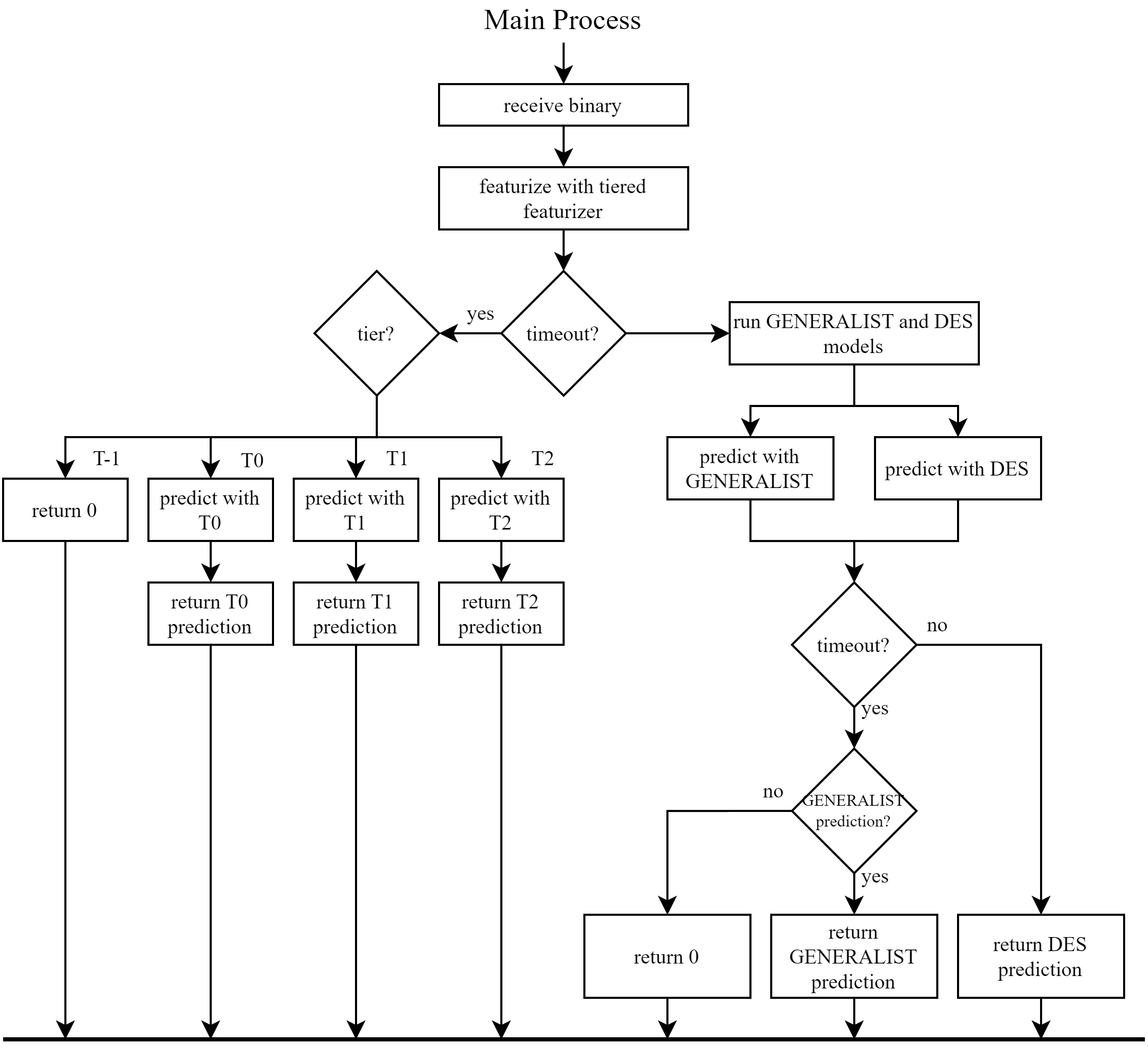
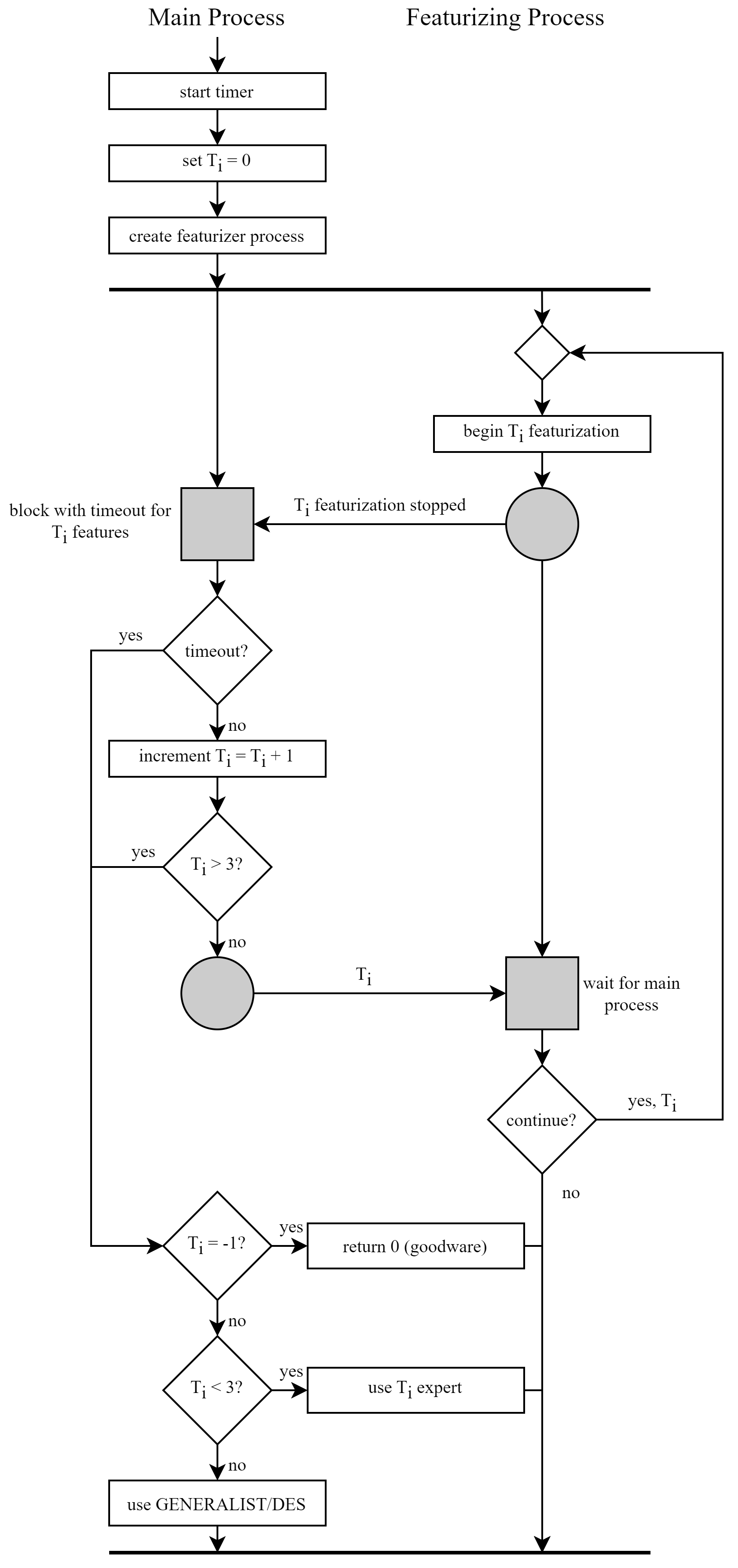
TSDES first featurizes a file. Given the 5s time constraint, I break files into several tiers. A process is spawned to featurize a file. If the file cannot be fully featurized in the alloted time for the featurizer (generally about 3.5s), then the most recent tier of features that was collected will be evaluated by a tier expert. Tier experts are models specifically trained to classify a subset of features. While it is generally less accurate than the main model (GEN + DES), it is much better than guessing. If the file is fully featurized in time, it is sent to the predictor.
Speculative Predictor
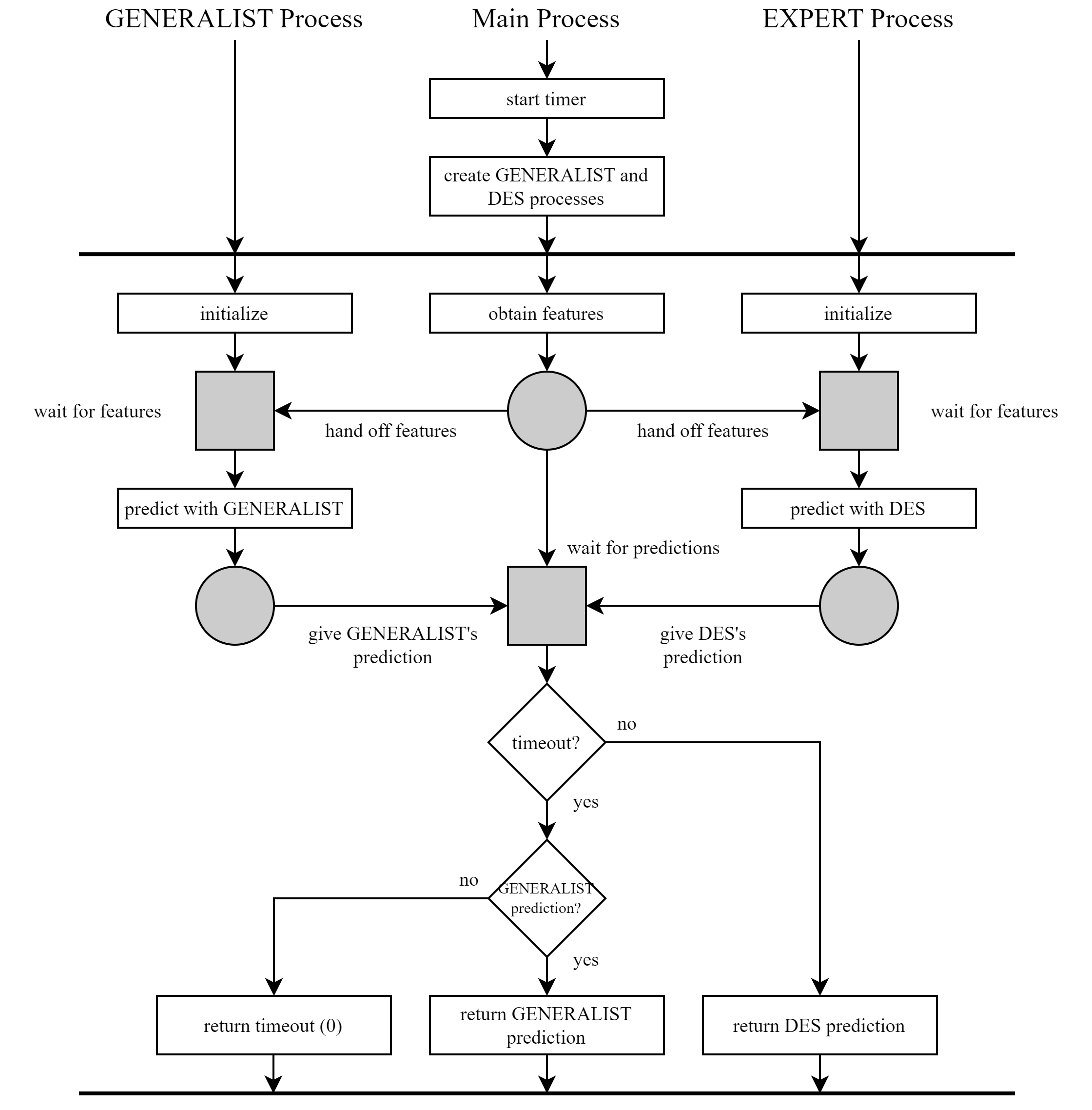
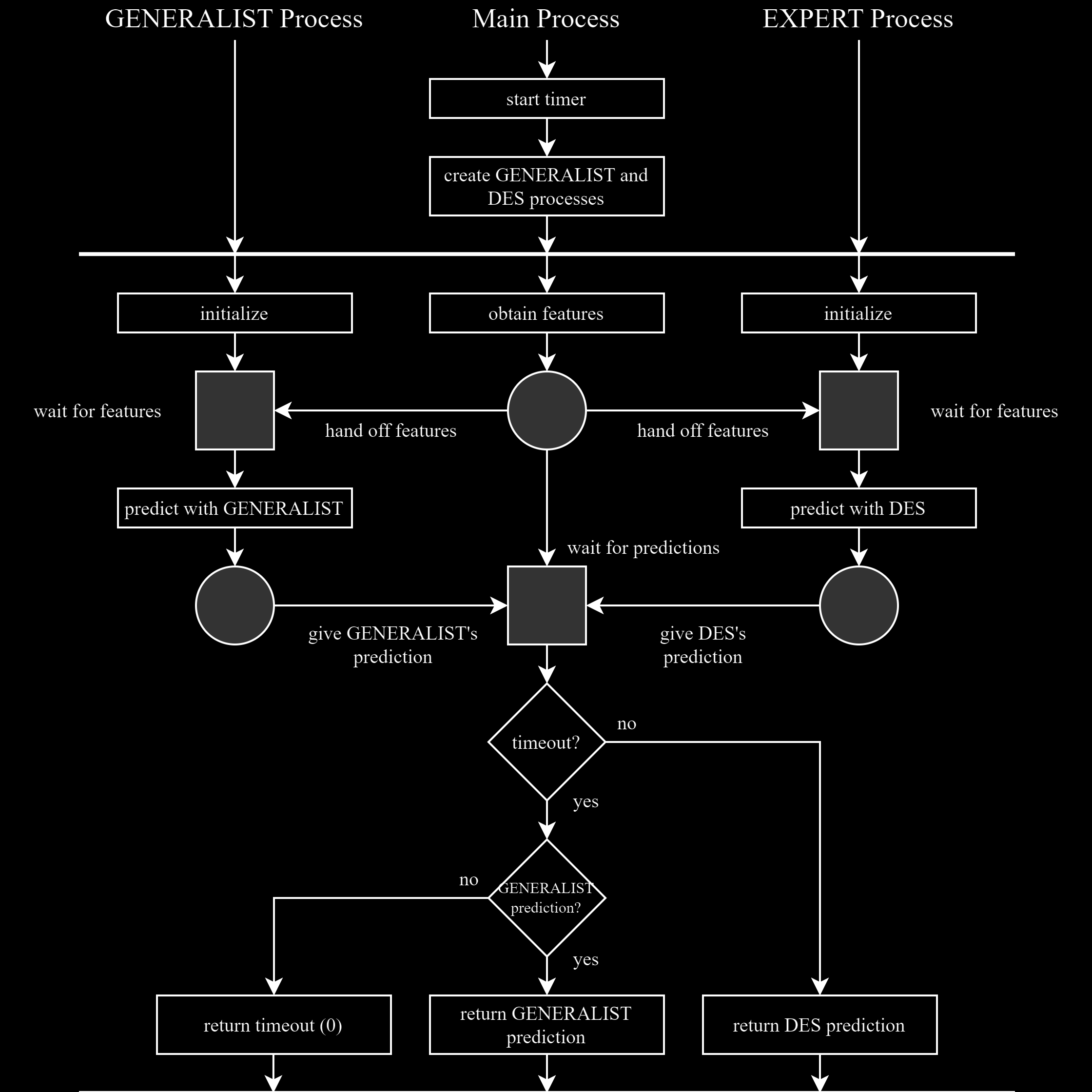
Speculative is a misnomer- this is a progressive predictor. The predictor predicts the file with two models- a GENERALIST model and a DES model (where the GENERALIST is also inside the DES). The DES is slower but more accurate, while the GENERALIST is faster but less accurate. Two processes are spawned to predict with the GENERALIST and the DES at the same time. If the DES does not finish, it will use the GENERALIST’s classification. If the DES finishes, it will use the DES’s classification. If neither finish, the predictor will return a 0 indicating “goodware” (since it did not finish in time), per competition guidelines. Hence, this is called progressive because it evaluates with two models at once- this misnomer spawned from me being initially inspired by speculative branch prediction.
Paper
A paper going into more detail can be found below, as I did not include specifics or reasoning in this explanation.
Gallery